
Fly ash brick machines
PM40 Fly Ash Brick Making Machine
A high-output fly ash brick plant. The PM40 presses 5 bricks per stroke with 75 tonf for 12,000 to 14,000 bricks per day, fed by a pre-feeding conveyor, a 750–800 kg pan mixer and a box feeder, on a 35 HP supply.
- Bricks per day
- 12,000–14,000
- Press force
- 75 tonf
- Power required
- 35 HP
- Manpower
- 6–7 per shift
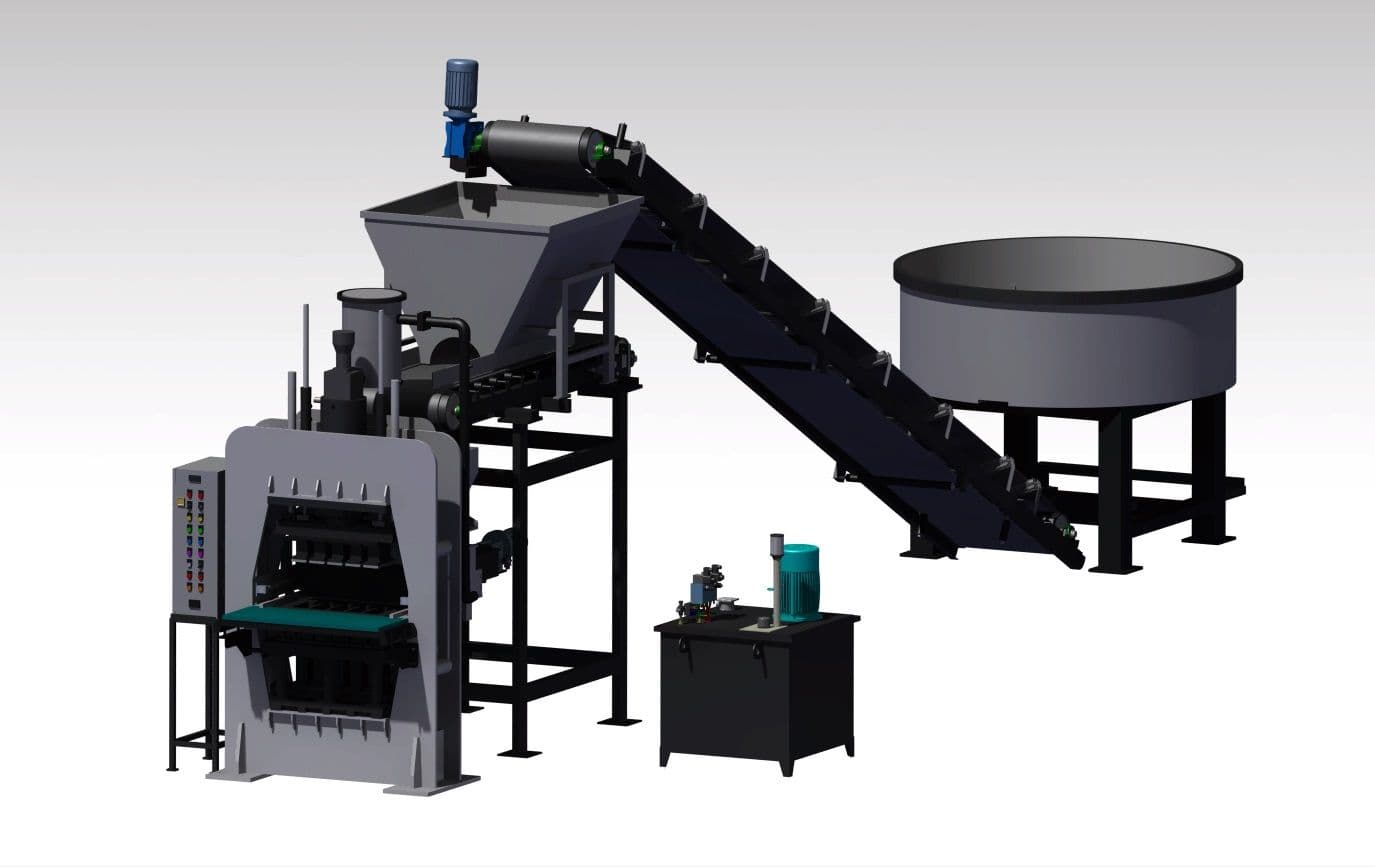
Specification
- Bricks per day
- 12,000–14,000
- Press force
- 75 tonf
- Power required
- 35 HP
- Brick mould
- 9 × 4 × 3 in, 5 cavity
- Pan mixer
- 750–800 kg
- Feeding
- Pre-feeding conveyor and box feeder
- Manpower
- 6–7 per shift
- Shed (minimum)
- 40 × 50 ft
- Pit
- 12.0 × 5.2 m, 700 mm deep
- Plant area (minimum)
- 8,000–10,000 sq ft
- Water per day
- 15,000–18,000 litres
- Wooden pallets
- 150–200, 75 bricks each
What's included
- Main machineQty 1
- Programmed PLC control panelQty 1
- Mould 9 × 4 × 3 in, 5 cavityQty 1
- Hydraulic power packQty 1
- Pre-feeding conveyorQty 1
- Pan mixer 750–800 kgQty 1
- Conveyor beltQty 1
- Box feeder for material storageQty 1
- Hydraulic pallet trolleyQty 1
Plus the standard plant layout for your site.
You arrange
- Civil work, including the pit, to our layout
- All electrical work
- All plumbing work
- Raw material, ISO VG 68 hydraulic oil, and an air compressor if required
- Wooden pallets, made locally to our design
- A crane to unload and place the machine
- GST, transport, loading and unloading of the machinery
- Extra training
- Food, travel and stay for our installation and maintenance team
Standard plant layout
Every PM40 comes with this drawing. It sets the press in a pit beside the mixer, conveyor, power pack and control panels, with a cement room and a fly ash room alongside.
- Shed as drawn
- 30 × 51 ft
- Pit
- 12.0 × 5.2 m, 700 mm deep
- Cement room
- 10 × 12 ft
- Fly ash room
- 18 × 30 ft
How a PM40 plant runs
The press sits in a pit, so the crew lifts less, output stays high and the bricks come off at pallet height. We send the standard pit layout and the wooden pallet design; you have the pallets made locally.
- 1
Load and dry mix
Two workers bring fly ash, stone dust (quarry dust) and 4–6 mm stone chips to the pan mixer by wheelbarrow, and cement by bucket, for the dry mix.
- 2
Wet mix
Water and hardener go in until the mixer operator can press the mix into a ball by hand without it wetting the hand.
- 3
Feed the press
The mixing team starts the conveyor from the pit, then opens the pan mixer door to send the mix to the main machine hopper.
- 4
Press in automatic mode
The PLC fills the mould, compresses the mix and pushes the bricks out of the machine, stroke after stroke.
- 5
Pick and palletise
The operator picks each brick the trained way and stacks it on a wooden pallet, 75 bricks to a pallet.
- 6
Stack and cure
One worker moves full pallets to the stacking area with the hydraulic pallet trolley. One more handles curing and cleaning.
Care, safety and maintenance
- Oil and grease the plant every day.
- Clean the machine after every run for a longer working life.
- Replace wear parts as they wear: mixer scrapers, hydraulic seal kits and electrical components.
- Never put a hand in the compression area during production. To clean it, switch to manual mode and turn the hydraulic system off.
From order to production
The PM40 is built in 30–45 days. Here is every step from your first visit to bricks on the pallet.
- 01
Visit our works
See the machine run and check the brick quality at our works in Igatpuri, Nashik.
- 02
Fix the price
We finalise the machine, moulds and cost with you.
- 03
Build in 30–45 days
While we build the machine, you get the civil work, power, water, raw material and crew ready.
- 04
Demo run, then dispatch
You see a demo run at our works before painting and packing. It ships with transit insurance.
- 05
Prepare the site
Before it arrives, arrange ISO VG 68 hydraulic oil, electrical and plumbing work to the layout, raw material, crew and a crane to unload.
- 06
Install and test
The plant is set to the layout, the earthing of every part is checked before power on, then we run an empty trial and a material trial.
- 07
Train your crew
Operation, safety and daily maintenance, plus why a steady mix ratio, press force, cleaning and curing give bricks that sell.
- 08
Plan the business
With your local raw material cost, labour cost and selling price, we work through the plant's numbers with you.
Compare the range
| Model | Bricks per day | Pavers per day | Press force | Power required |
|---|---|---|---|---|
| PM16 | 5,000–7,000 | No | 30 tonf | 24.5 HP |
| PM24 | 8,000–10,000 | No | 50 tonf | 27 HP |
| PM32 | 10,000–12,000 | No | 60 tonf | 27 HP |
| PM40 | 12,000–14,000 | No | 75 tonf | 35 HP |
| PM48 | 14,000–16,000 | No | 90 tonf | 35 HP |
| PMA24 | 8,000–10,000 | 2,500–3,000 | 60 tonf | 27 HP |
| PMA32 | 10,000–12,000 | 4,000–5,000 | 75 tonf | 27 HP |
| PMA24 M50 | 8,000–10,000 | No | 100 tonf | 35 HP |
| PMA32 M50 | 10,000–12,000 | 4,000–5,000 | 150 tonf | 40 HP |
Questions about the PM40
How many bricks does the PM40 make per day?
12,000–14,000 fly ash bricks per day with the 9 × 4 × 3 in, 5 cavity mould, on a 75 tonf hydraulic press.
How much space does the PM40 plant need?
Plan for a plant area of at least 8,000–10,000 sq ft, a shed of at least 40 × 50 ft, a pit of 12.0 × 5.2 m, 700 mm deep, a 10 × 12 ft cement room and an 18 × 30 ft fly ash room. We send the standard layout drawing for your site.
What power and water does the PM40 need?
35 HP of connected load, and about 15,000–18,000 litres of water a day. Electrical and plumbing work up to the machine is done by you, to our layout.
How many people run the PM40?
A crew of 6–7 per shift: two at the pan mixer, the press operator who picks and stacks the bricks, one on the hydraulic pallet trolley, and one for curing and cleaning. The press runs from a programmed PLC panel.
What raw materials does it use?
Fly ash, stone dust (quarry dust), 4–6 mm stone chips and cement, mixed with water and a hardener. We help you set the mix ratio for your local materials.
How many wooden pallets do I need?
150–200, 75 bricks each. We give you the pallet design and you have them made locally.
How long does delivery of the PM40 take?
We build the machine in 30–45 days. You see a demo run at our works before it is painted, packed and dispatched with transit insurance. We then install it, run an empty trial and a material trial, and train your crew on site.
What maintenance does the PM40 need?
Oil and grease the plant every day. Clean the machine after every run for a longer working life. Replace wear parts as they wear: mixer scrapers, hydraulic seal kits and electrical components. Never put a hand in the compression area during production. To clean it, switch to manual mode and turn the hydraulic system off.
What do I need to arrange?
Civil work, including the pit, to our layout; All electrical work; All plumbing work; Raw material, ISO VG 68 hydraulic oil, and an air compressor if required; Wooden pallets, made locally to our design; A crane to unload and place the machine; GST, transport, loading and unloading of the machinery; Extra training; Food, travel and stay for our installation and maintenance team.
Can I see the PM40 working?
Visit our works at Gut No 115, Wadivarhe, Wadiwarhe Dam, Igatpuri, Nashik 422403. Call +91-8381011444 to fix a time.
Tell us what you want to make
Share the block type and daily output you need. We'll come back with the right machine and a price.
Call sales
+91-8381011444WhatsApp
Message usVisit the works
Gut No 115, Wadivarhe, Wadiwarhe DamIgatpuri, Nashik 422403Maharashtra, IndiaGet directions
Request a quote
Takes under a minute.